

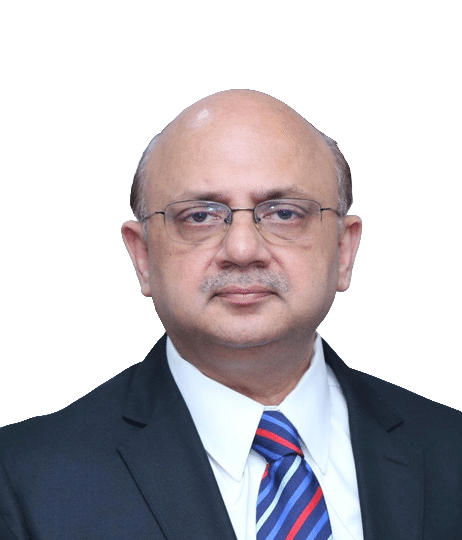
Shri Rajiv Bansal is a distinguished Indian civil servant and former aviation-sector leader whose career has spanned public policy, technology, energy, infrastructure and aviation. A 1988-batch Indian Administrative Service officer of the Nagaland cadre, he served as Secretary, Ministry of Civil Aviation, from October 2021 until his superannuation in 2024, following an earlier tenure as Chairman and Managing Director of Air India. He subsequently joined the Board of the Bombay Stock Exchange (BSE) as a Public Interest Director in 2025, where his experience in public-sector reform, aviation, regulation and digital transformation continues to inform his contribution to institutional governance.
Mr. Bansal’s association with Air India was particularly significant. He first served as interim CMD in 2017 and returned as CMD in February 2020, at a critical period for the national carrier. When he assumed the position in 2017, Air India was carrying a debt burden of more than ₹50,000 crore and had faced prolonged financial challenges. He articulated a clear focus on profitability, improving on-time performance and enhancing customer satisfaction, while also overseeing the airline during a period of fleet expansion and network development. His earlier experience with the Civil Aviation Ministry and his role on the board of National Aviation Company of India Ltd. during the formative years of the Air India–Indian Airlines merger gave him valuable institutional knowledge of the national carrier and the broader aviation system.
His appointment as Civil Aviation Secretary in 2021 brought this operational experience into the policy domain. At the Ministry, he was responsible for steering one of India’s most strategically important and rapidly transforming sectors. His tenure coincided with the recovery of aviation from the COVID-19 disruption, the restructuring and privatisation of Air India, the expansion of airport infrastructure, the growth of regional connectivity and the emergence of India as one of the world’s fastest-growing aviation markets. His extensive administrative background enabled him to work across government, regulators, airlines, airports and other stakeholders during a period of profound structural change.
Mr. Bansal’s wider career demonstrates considerable breadth. Before returning to aviation, he served as Additional Secretary in the Ministry of Petroleum and Natural Gas, Joint Secretary in the Ministry of Electronics and Information Technology, Secretary of the Central Electricity Regulatory Commission and Joint Secretary in the Department of Heavy Industry. In the technology ministry, his portfolio included areas such as digital payments, the IT Act, Aadhaar and internet governance, giving him valuable exposure to some of India’s earliest large-scale digital-transformation initiatives. He also held senior positions in the Government of Nagaland, including responsibility for health and family welfare, school education and finance.
Academically, Shri Bansal is a civil engineer who graduated from IIT Delhi in 1986. He subsequently obtained a Diploma in Finance from ICFAI, Hyderabad, and an Executive Master’s in International Business from the Indian Institute of Foreign Trade, Delhi. His professional profile is therefore distinguished not only by senior administrative responsibility but also by a combination of engineering, finance, international business, technology and policy expertise.
Today, Shri Rajiv Bansal brings this unusually diverse experience to corporate governance and public-interest leadership. His career reflects a consistent ability to operate at the intersection of government policy, infrastructure, technology and large-scale institutional transformation. From helping navigate the complexities of Air India’s transformation to shaping national aviation policy and contributing to the governance of India’s premier stock exchange, his professional journey represents a sustained contribution to India’s infrastructure and economic-development landscape.